
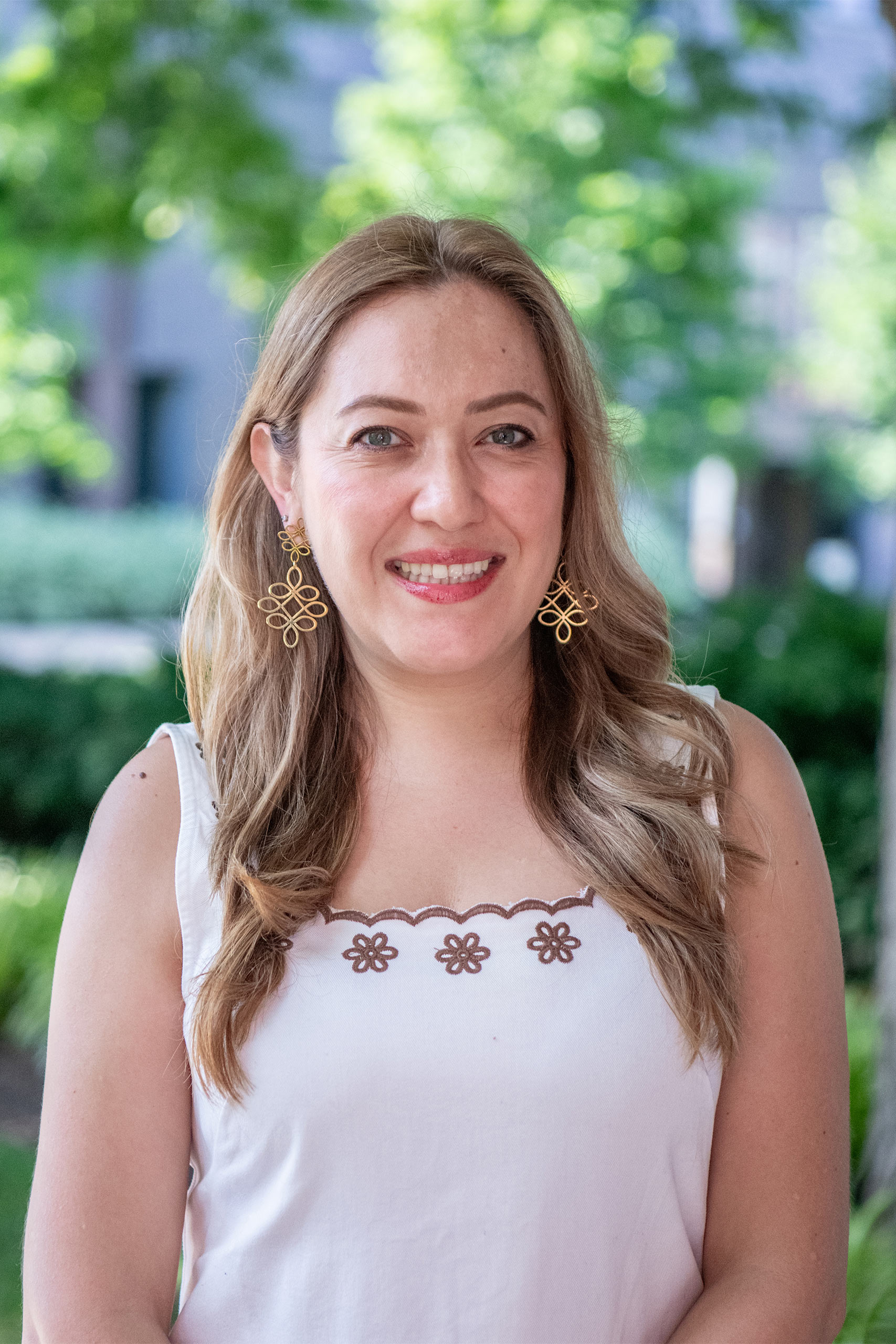
Meet Alejandra Balcázar
Alejandra Balcázar, Shipley's new Director of Belonging & Connection, began on July 1. She comes to Shipley from the University of Maryland, Baltimore, where she served as Assistant Director in the Student Success Center. In this Q&A, she shares what drew her to Shipley, how her own journey from Colombia shapes the way she leads, and why belonging is a daily commitment rather than an initiative.
Role(s) at Shipley
Director of Belonging & Connection
Education
M.S., Diversity, Equity, and Inclusion Leadership, University of Maryland, Baltimore (UMB)
Master's degree, Spanish Language Teacher Education, UNIBA – Centro Universitario Internacional de Barcelona
Bachelor's degree, Foreign Languages and Literatures, Pontificia Universidad Javeriana
Prior Professional Experience
Assistant Director, Student Success Center — University of Maryland, Baltimore
Student Success and Engagement Manager — Towson University
Middle School World Languages Department Chair — The Bryn Mawr School, Baltimore
Middle School Liaison for Diversity, Equity and Inclusion — The Bryn Mawr School, Baltimore
World Languages Teacher — The Bryn Mawr School, Baltimore
You were a teacher earlier in your career. Why did you originally choose to work in education?
I originally chose to work in education because I saw it as one of the most powerful spaces to create access and opportunity. As a first-generation college graduate and someone who navigated multiple education systems, I understood early on how transformative a supportive learning environment can be. Teaching allowed me to be part of that transformation, helping students not only develop academically, but also see themselves as capable, valued, and deserving of opportunity.
What drew you to Shipley and to this role?
What drew me to Shipley, and to this role specifically, was the school’s clear commitment to both excellence and community. Shipley is not only asking important questions about belonging and connection; it is actively investing in the structures and leadership to do that work well. This role presents an opportunity to be both strategic and relational, to build systems that support all students while also shaping the daily experiences that define whether people truly feel they belong.
You’ve said belonging isn’t something we just talk about — it’s something we intentionally create. What does that look like day to day?
When I say belonging is something we intentionally create, I mean that it shows up in the small, consistent decisions we make every day. It’s learning and using someone’s name correctly. It’s noticing when a student who is usually engaged has become quiet and checking in. It’s greeting students in the hallway, inviting someone who is sitting alone to join a group, or making sure every voice is heard during a discussion. It’s celebrating different cultures and experiences throughout the year and creating opportunities for students and families to share who they are.
It also shows up in how we design programs, communicate with students and families, and respond to challenges with curiosity and empathy. Belonging is built through intentional practices like advisory conversations, mentorship, community programming, and collaboration across teams, but it is equally shaped by the everyday interactions that tell someone, "You matter here." Belonging is not an initiative; it is a daily commitment that requires consistency, accountability, and care.
You moved from Colombia to the U.S. 15 years ago. How has your own experience of finding belonging shaped the way you will lead this work at Shipley?
Moving from Colombia to the United States 15 years ago has profoundly shaped how I approach this work. When you move to a new country, belonging does not happen automatically. You have to build it. I learned that creating community starts with being willing to make the first connection, being curious about people whose experiences are different from your own, and inviting them to be curious about yours. Some of the strongest relationships I have built have been with people who do not look like me, do not share my background, or have had very different life experiences. Those relationships have expanded my perspective and reminded me that belonging is not about finding people who are just like us. It is about creating spaces where people feel valued, respected, and able to learn from one another.
There have been many moments when I was the only Latina or the only immigrant in the room. At first, that felt intimidating. Over time, I realized it was also an opportunity. It gave me the chance to represent perspectives that might otherwise be missing, help others better understand my experiences, and advocate for people whose voices were not yet at the table. Representation matters because when someone sees a person who looks like them in a leadership role, they begin to believe they belong there too. That experience continues to shape how I lead. I strive to build authentic relationships, create meaningful connections across differences, and ensure that every student, family, and colleague knows they are seen, valued, and that they have a place in this community.
What do you hope students, families, and colleagues feel when belonging and connection are working well at Shipley?
When belonging and connection are working well at Shipley, I hope students, families, and colleagues feel a strong sense of trust and ease. I want them to feel seen, supported, and confident that they can show up as their full selves. It should feel like a place where relationships are genuine, where communication is clear, and where people know that they matter, not just in moments of success, but consistently.
Outside of work, what brings you joy or helps you recharge? Do you have any hobbies or interests you’d like to share?
Outside of work, I recharge by staying active, spending time with friends and family, and exploring new places. I love to travel whenever I have the chance because it allows me to experience different cultures, meet new people, and continue learning about the world. I also enjoy trying new restaurants, taking long walks, and finding small moments to slow down and reset after a busy week. Those experiences help me return to my work with fresh energy and perspective.
What’s a random, interesting thing about you that our community might enjoy learning about you?
A random and fun fact about me is that I speak multiple languages and have lived and studied in different parts of the world, which has shaped how I connect with people across cultures. Whenever I travel, I also try to take a dance or art class that reflects the local culture. Whether it is taking a salsa lesson in Cuba or learning tango in Buenos Aires, I love experiencing a place through its traditions. It is one of my favorite ways to connect with people, learn something new, and create memories that go beyond sightseeing.