
MUSIC NEWS
A new Friday afternoon program brings Upper School musicians to Lower Campus, where they mentor and make music with fifth-grade students.
EACH ONE TEACH ONE
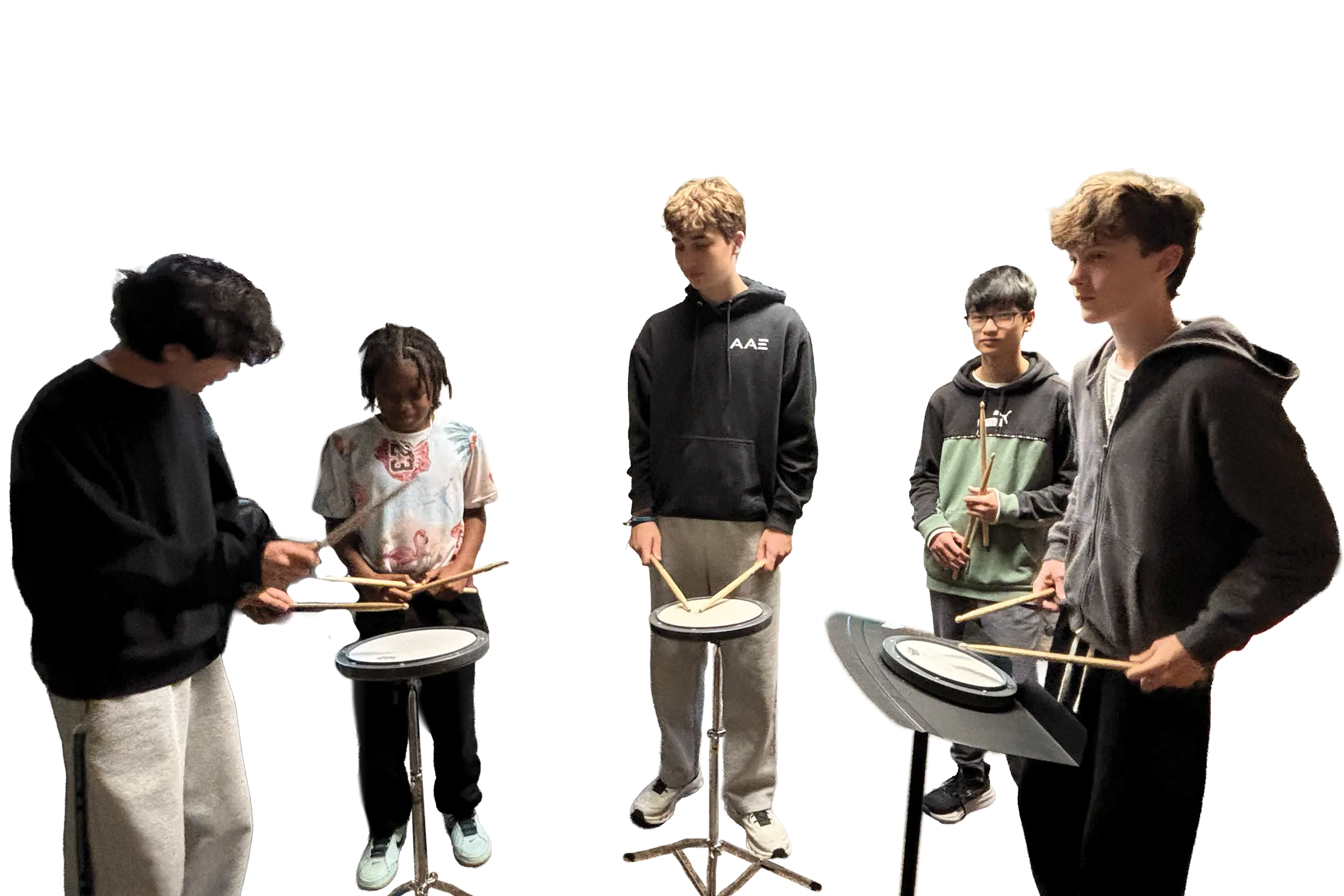
Every Friday afternoon, a group of about 12 Upper School musicians walks down to Howland House with a simple mission: help a fifth grader fall in love with making music on their instrument. The program is called Music Mentors, which was launched this year as a pilot. “I thought the real draw to Upper School students would be the fulfillment of service hours,” says Harley Givler, Director of Bands and Chair of the Music Department. “But they love it in a way I did not expect.”
“There is a certain raw enthusiasm and curiosity that the younger kids have that reminds us older musicians why we fell in love with music in the first place. It creates a cycle of positivity that benefits everyone involved.” |
| — Emily Nesbitt '27 |
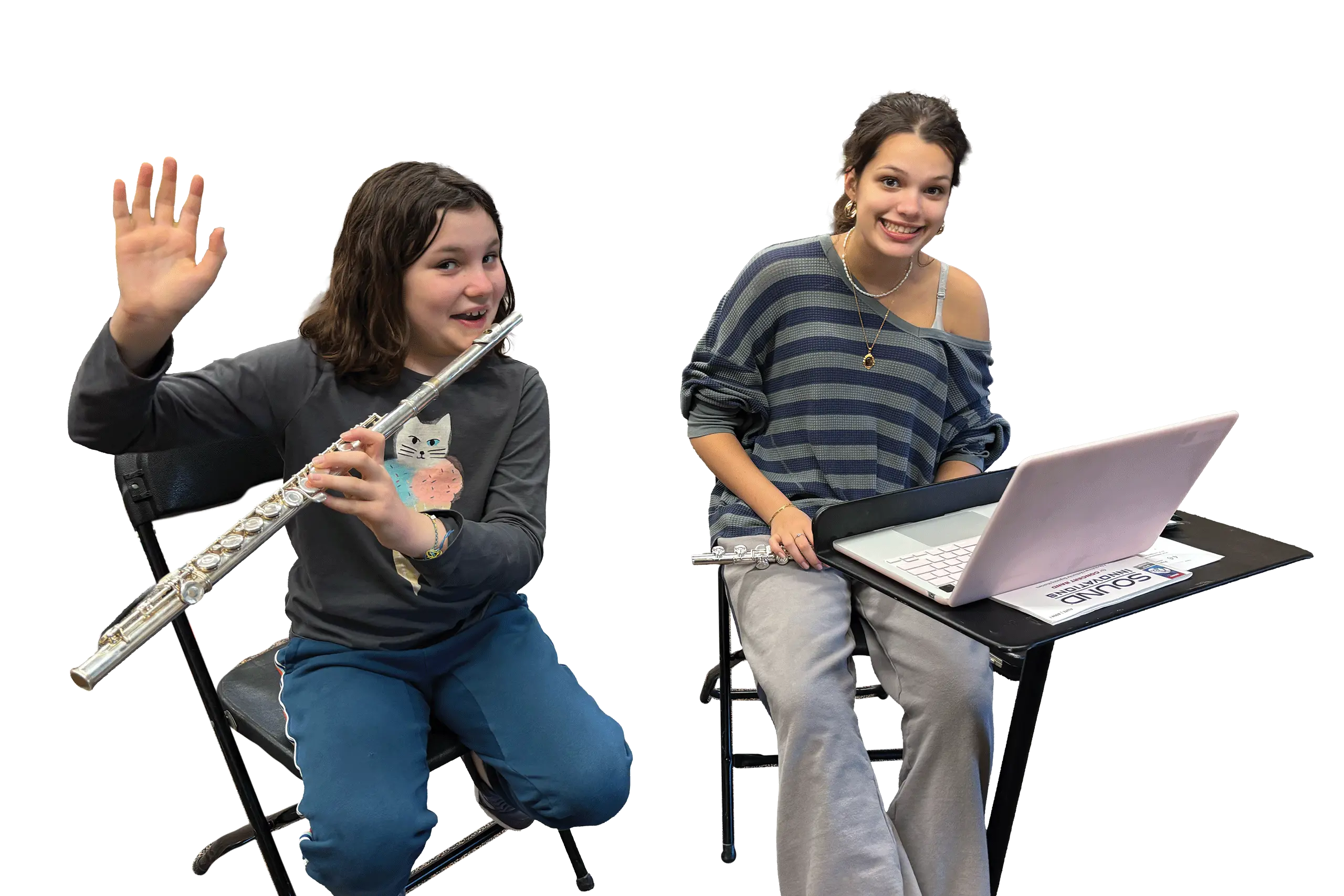
The concept is rooted in a simple idea—“each one, teach one”—the belief that younger musicians learn powerfully from those just a few steps ahead of them. During Shipley’s Upper School Flex Period, mentors sign in, walk to Lower Campus, and set up in Howland House. Fifth graders are paired with an older student based on instrument and interest. From there, the session is entirely student-driven. A clarinetist might ask to try ukulele. A percussionist might want help with rudiments. The atmosphere is relaxed, informal, and fun—guided but not rigid, with Givler on hand to supervise.
What makes the program work, Givler says, is the unique voice older students bring. A high schooler remembering what it felt like to pick up an instrument for the first time connects with a younger student differently than an adult teacher drawing on distant memory. And the mentors are discovering something, too: some are realizing they have a genuine passion for teaching. For others, the experience deepens their own playing—after all, as the old adage goes, you truly know something when you can teach it.
“Teaching younger kids has helped me become better at playing music, because it allows me to really understand the music and the techniques I’m explaining. It’s also made me more patient and understanding toward myself when it comes to learning and improving on an instrument.” |
| — Eliana Myers '28 |
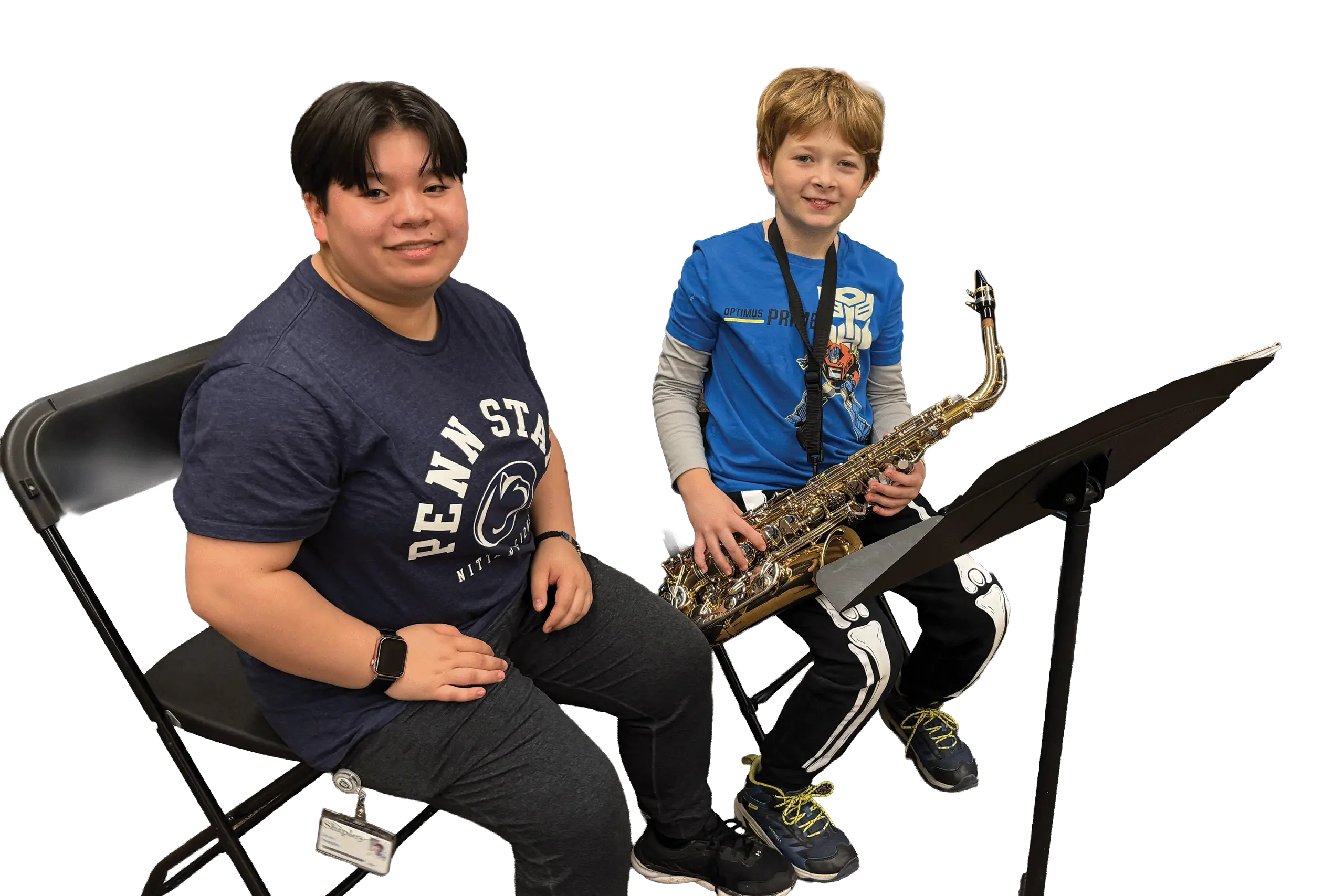
The program is free, open to any fifth grader, and runs from dismissal to 3:15 on Fridays without interfering with other activities, and some students choose to stay later. It’s a small window of time, but the bonds forming inside it are real. Givler hopes to expand the program to fourth grade in the future, but for now, the pilot is doing exactly what he’d hoped and more: getting students playing together in community with one another, across divisions, and reminding everyone involved why they picked up an instrument in the first place.