Elise Dadourian ’16 on Making Wild Horse Nine
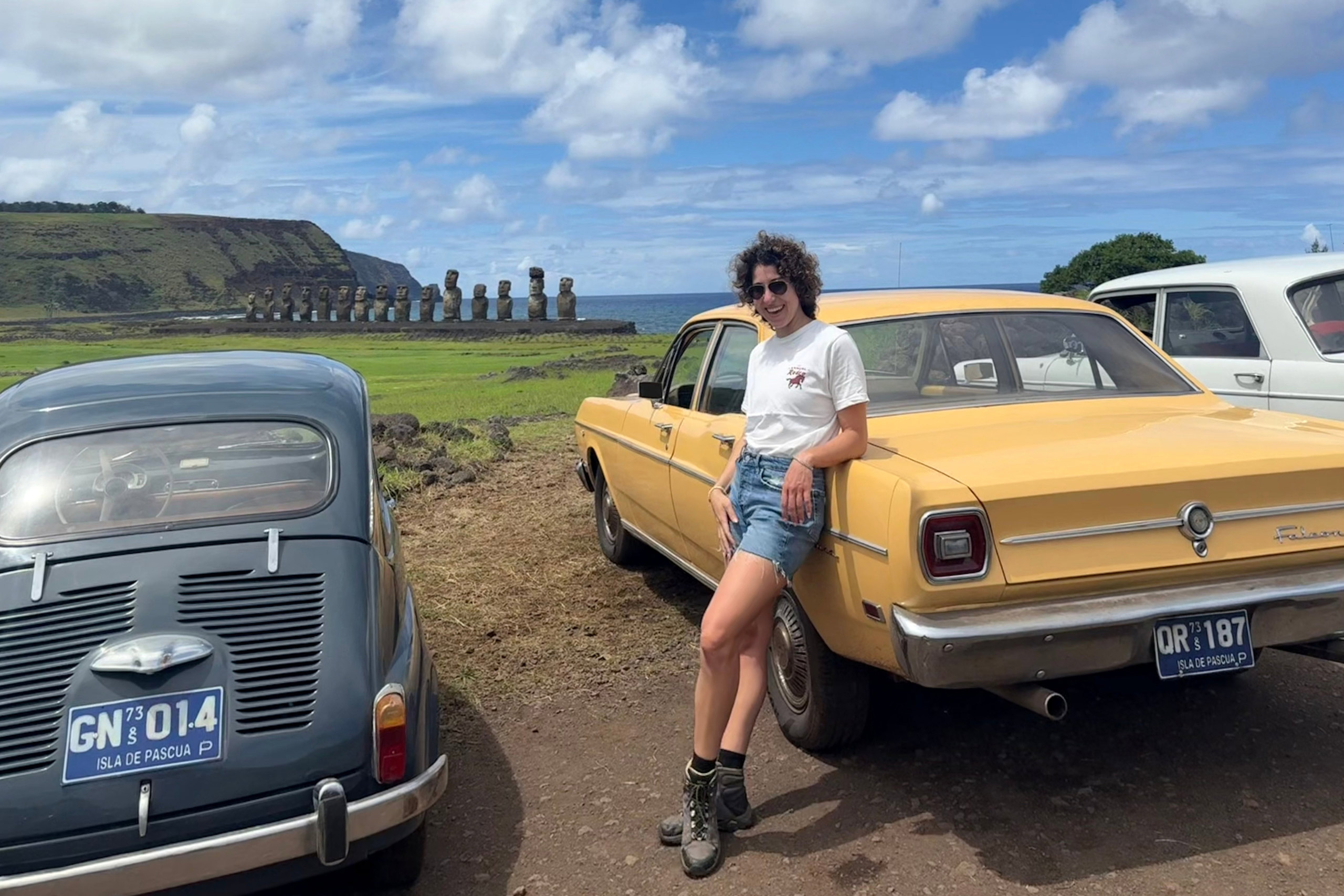
Shipley alumna Elise Dadourian ’16 spent three and a half years at London-based Blueprint Pictures working under producer Graham Broadbent, who brought her to set for Martin McDonagh’s Wild Horse Nine, starring Sam Rockwell and John Malkovich. As on-set assistant to Broadbent and fellow producer Pete Czernin, she spent two months on Rapa Nui (Easter Island), waking each morning to the sound of wild horses grazing. “Truly a magical, magical place,” she says. Read Elise’s reflections on the shoot below.
I’ll admit I was nervous. The world’s most remote inhabited island — 2,000 miles from the nearest landmass and over 8,000 from home. One town, one hospital, one airport runway. No second floors, no traffic lights.
My first impression was of stillness. I stepped off the plane from Santiago, John and Sam just ahead of me, and looked out at our home for the next six weeks: vast swaths of grassland encircled by volcanic rock, the unending Pacific stretching to the horizon. A blanket of white fog above it all, erasing any last clue as to where or when we were.
At the end of the tarmac, we were met by a man in a loose brown suit — the island’s sole customs officer — who asked each of us, Did you bring any honey? No? Then, Iorana! Welcome to Rapa Nui! Pink leis were placed around our necks. The rest of the crew had already arrived and was hard at work preparing for the shoot. This would be no ordinary production. So far from the mainland, with so few resources on site, the planning would have to be meticulous. As the producers put it: there’s a reason the last feature shot here was over thirty years ago.
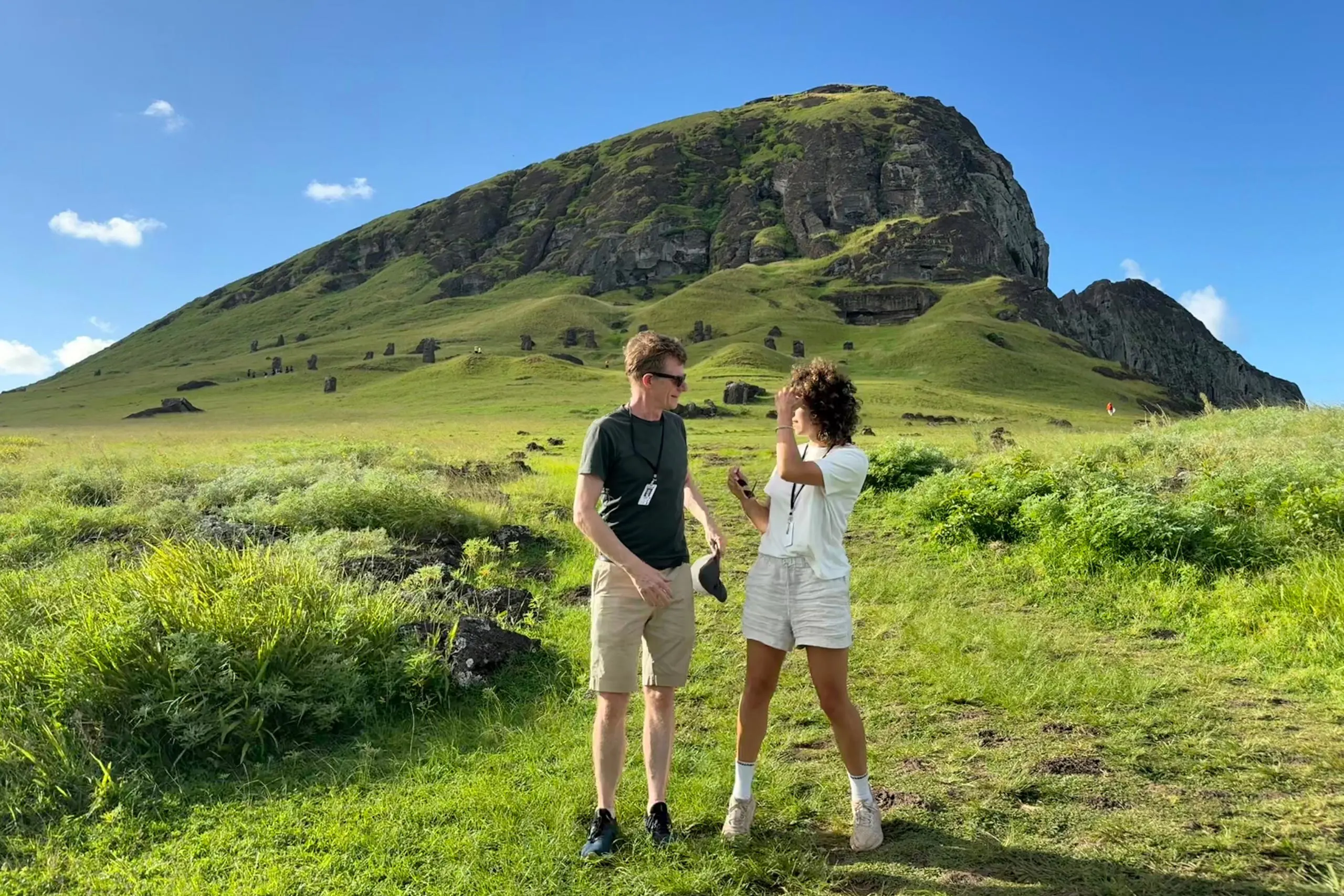
But the logistical challenge was only half of it. Nearly half the island is a protected UNESCO World Heritage Site, and 50-60% of the population are indigenous Rapa Nui people… We couldn’t exactly bring a crew of 250 people and just start pointing cameras.
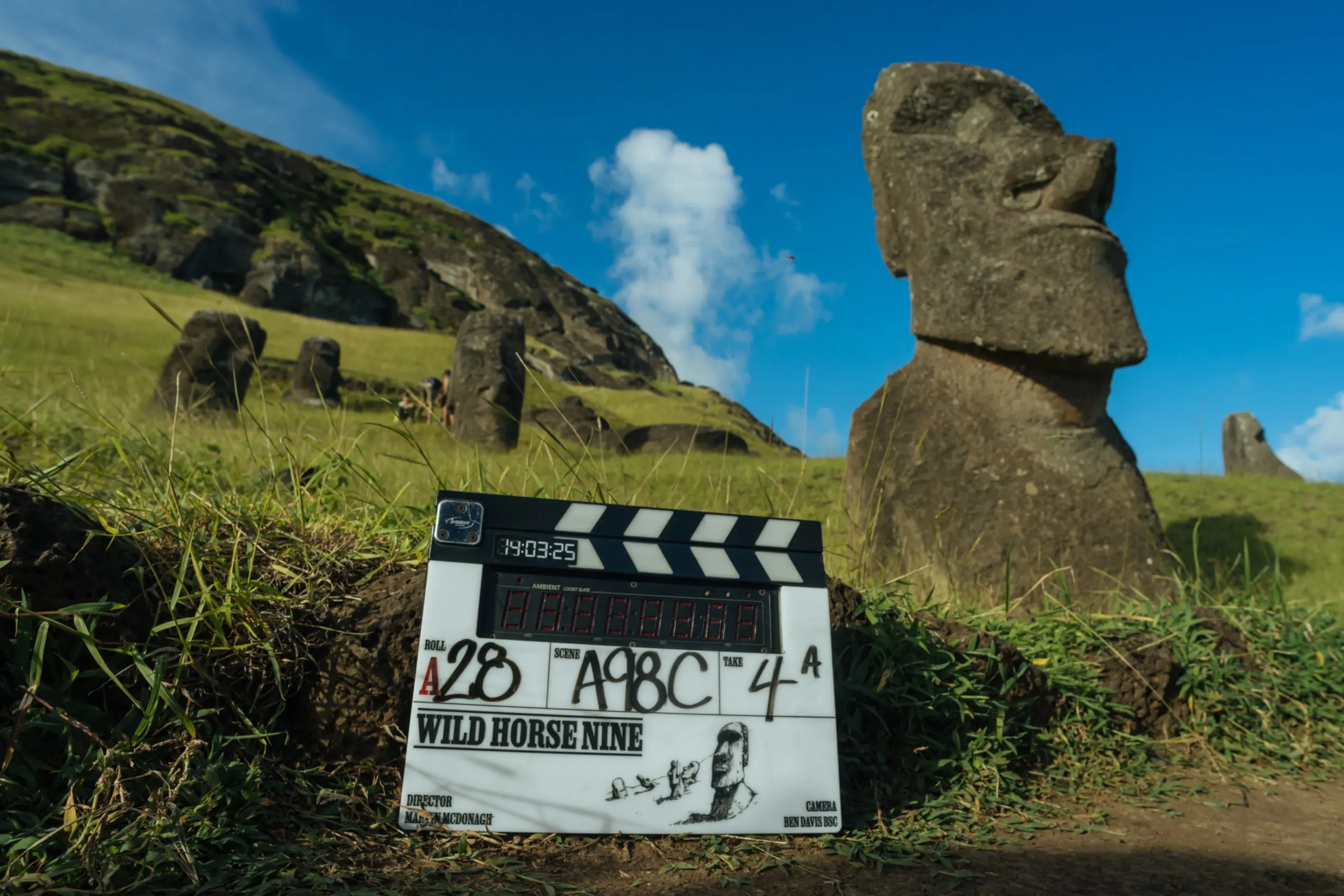
The moai, for their part, seemed unbothered by our arrival. I’ll never forget the first time I saw one. I’d just dropped my bags at the cabin I’d be living in — modest, shall we say (i.e. no AC, plenty of cockroaches, but a flushing toilet and a stove you could light with a match) — and walked fifty paces down to the sea. To my right was Ahu Tahai: five stone behemoths, their backs to the ocean, some a little worse for wear but steadfast in their endurance. For centuries, they’ve stood guard side by side, weathering wind and rain, the passing of the seasons – the men who built them rising and falling like the tide. I felt small and impermanent standing in their shadow.
Time moves differently here. No one is in a rush. No one cuts you off or forgets to say good morning. When the rain knocks out the electricity and the restaurants go dark, the diners just continue eating. What will be, will be.
There’s something deeply spiritual about that sentiment, and nowhere was it more present than in the Hanga Roa church on a Sunday morning. I took our composer Carter Burwell one week, knowing he’d been listening closely to the sounds of the island. When the service began, our breath escaped us. A thunderous, ancestral chant filled the room, backed by the percussive rattle of the Kauaha — an instrument made from a dried horse jawbone, whose teeth shake when struck. Ancient. Transcendent. I glanced at Carter; his eyes were closed.
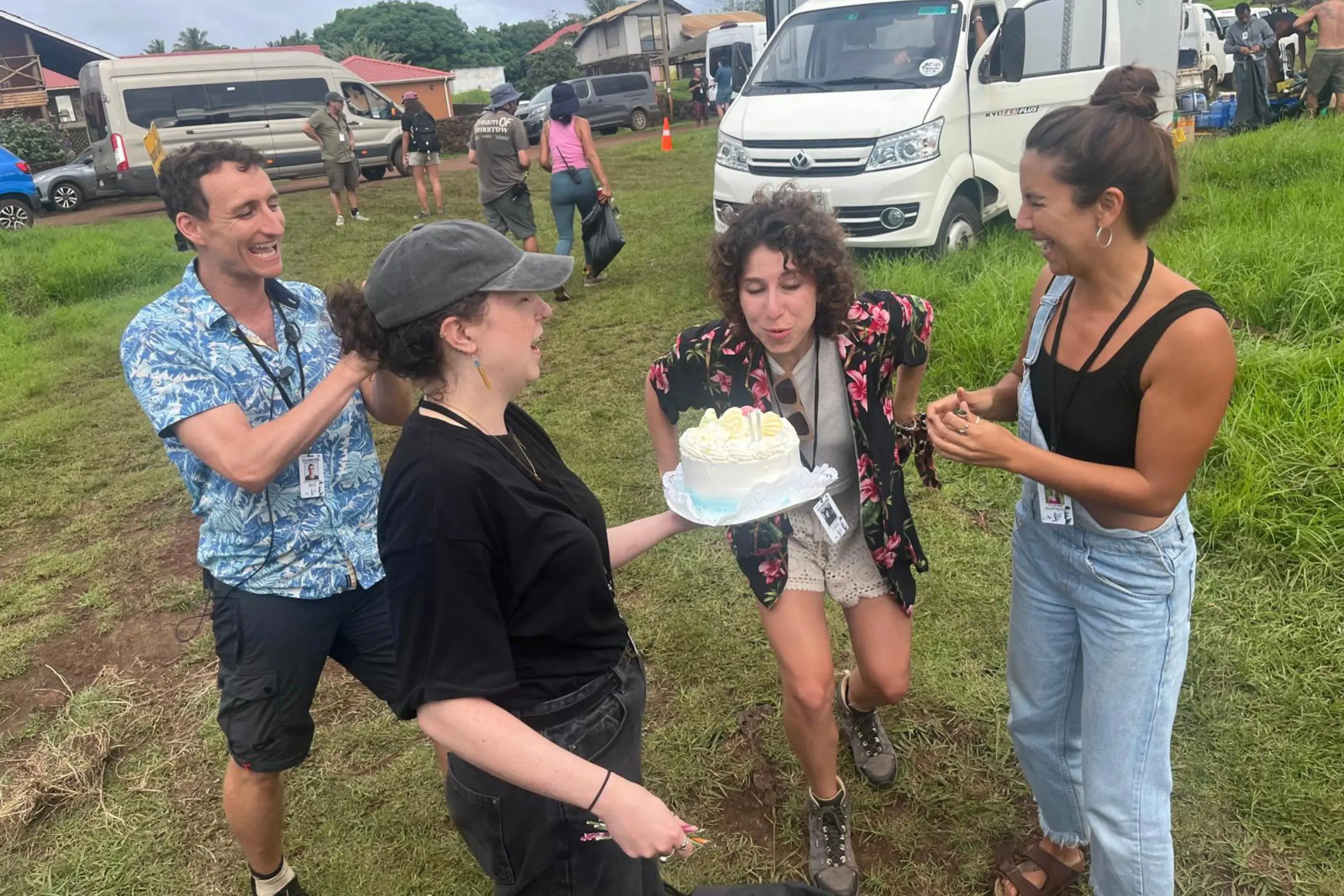
That was perhaps my most precious moment on the island, one where I felt wholly a part of something. The afternoon we gathered to play soccer on the local pitch came as a close second: my team, the internationals, led by Martin himself, against some of the Chilean crew members. Weeks into the shoot and so far from home, coming together like that meant everything. I have a lot of respect for Martin for making a family out of 250 strangers.
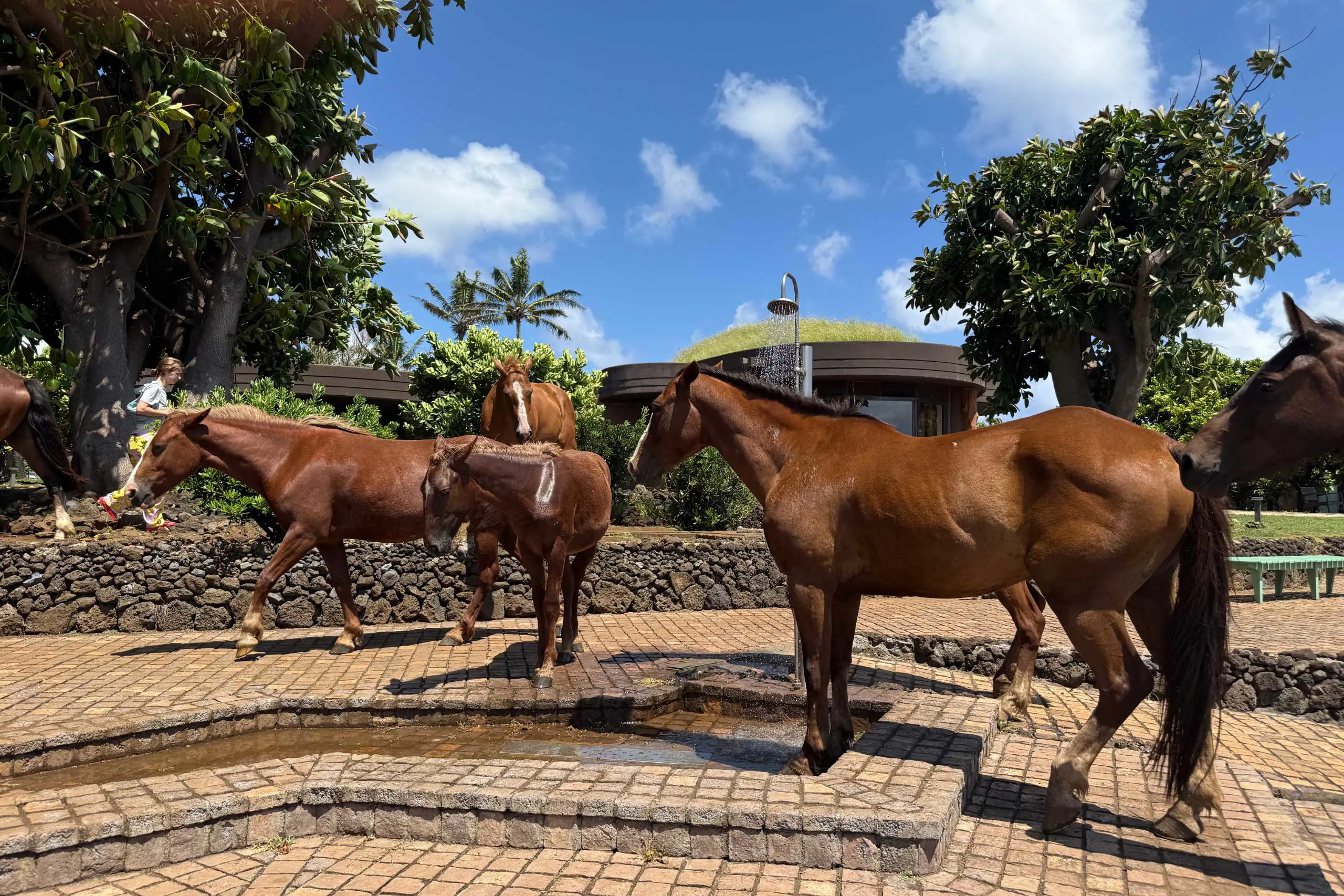
My favorite memory with him, though, was from another day. The Rapa Nui horses – wild, curious, and completely without agenda – roamed the island wherever and whenever they pleased. During an afternoon off from shooting, Martin and I were sitting on opposite sides of the Nayara pool when a group of seven horses appeared out of nowhere. Clearly, they had heard he was a man of importance. While I watched in unsuppressed glee, they circled him on his sunlounger and began taking nips at the red bandana on his head. Martin was laughing as hard as I was. We joked about renaming the film Wild Horse Seven.
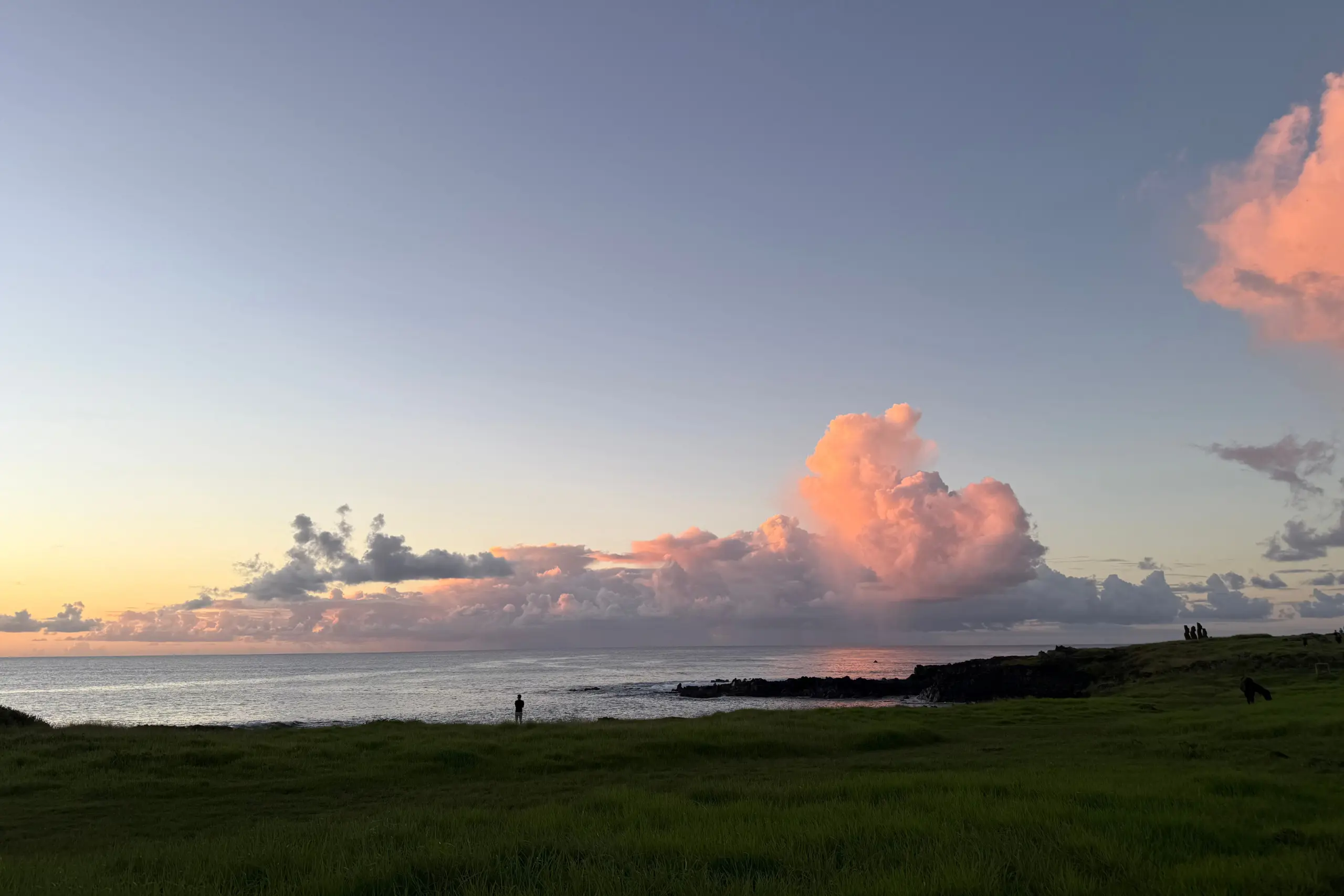
It pains me to admit it – you know I hate a cliche – but what I miss most is the sunsets. Marvelous splashes of gold, ember, and fuchsia, like leviathan birds of paradise reaching across the sky. And then, once the sun melted into the sea, the second act began: with no light pollution for thousands of miles, the sky opened up and poured out more stars than I ever knew there were.
Beauty like that doesn’t exist by accident. As the shoot drew to a close, I began dreading the day I’d have to leave. Living there, I felt my feet reconnect with the ground, my head tilt to the sky, and something in me remembered that I’m part of something much, much bigger than myself. I don’t believe much in any particular God, but on Rapa Nui, I felt confident we are not alone.