THEATRE NEWS
An Interview with Chelsea Clark, Theater Producer & Director

MORE THAN A PERFORMANCE
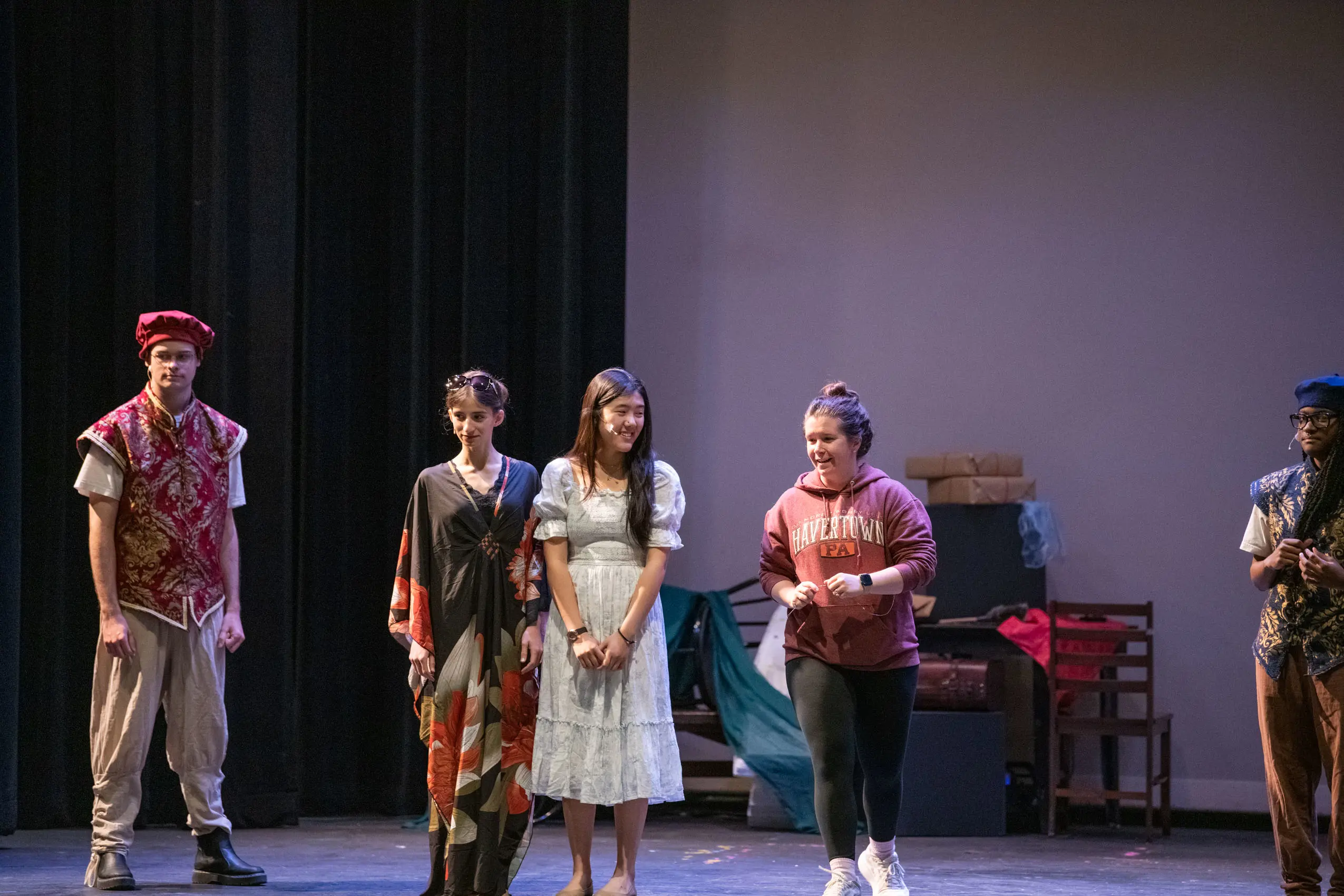
For Chelsea Clark, Shipley’s Theater Producer and Director, the magic of theater lies in its humanity. “At its core, all theater is storytelling,” she explains. “Not only our own stories, but the stories of others. As an actor, you become a vessel for someone else’s story—by putting yourself in someone else’s shoes, and learning empathy along the way.”
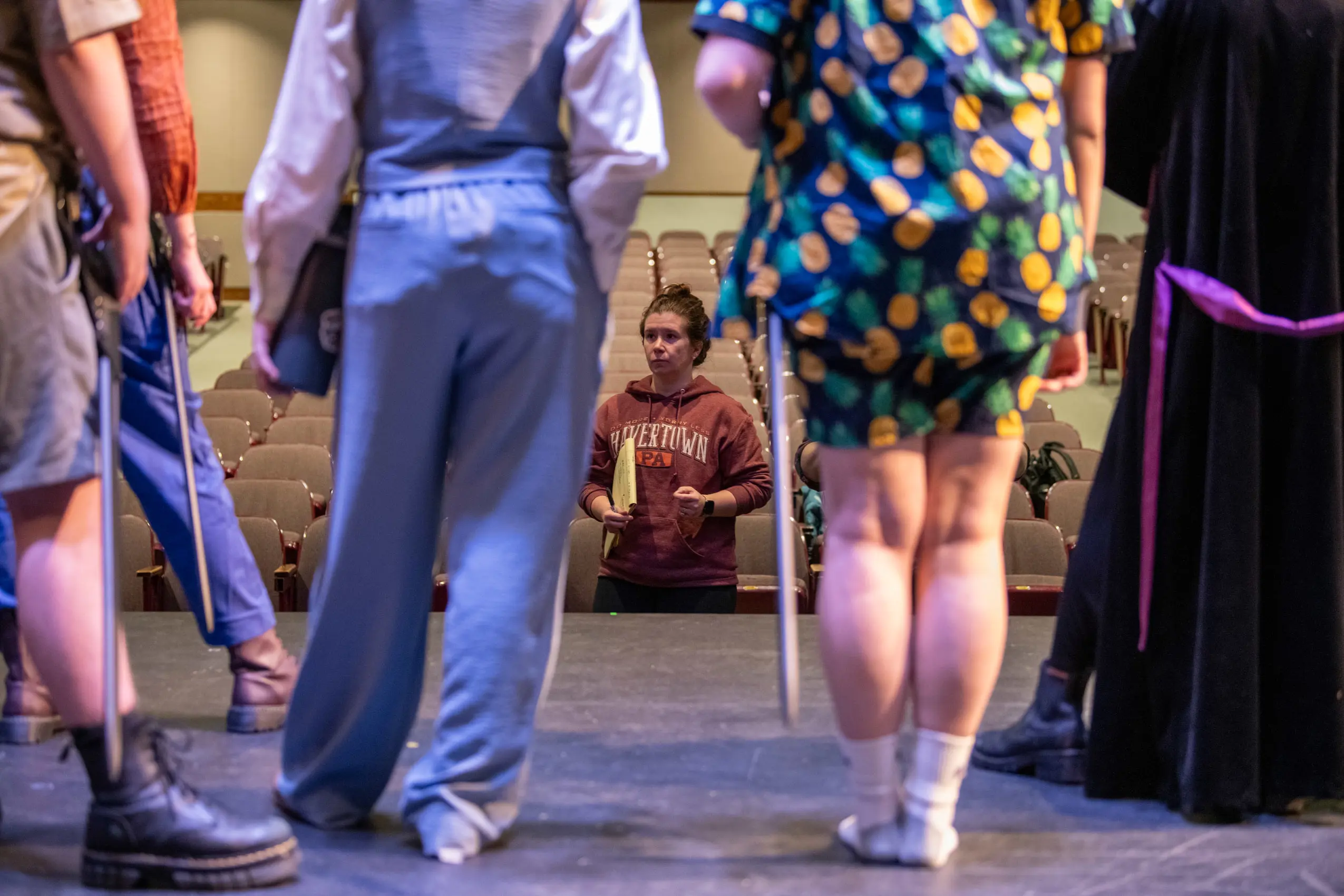
At Shipley, students in all three divisions can participate in the theater program, which offers a rich variety of experiences. Upper School students tackle contemporary plays each fall and a Shakespeare performance each spring, while students in all divisions can participate in main-stage musicals. “The program is designed to expose students to many different kinds of theater,” says Clark. “They don’t only perform musicals. Our fall plays are short, edgy, contemporary works that students can really sink their teeth into, while our Spring Shakespeare is a more elevated performance engaging with challenging text and complex ideas and emotions.”
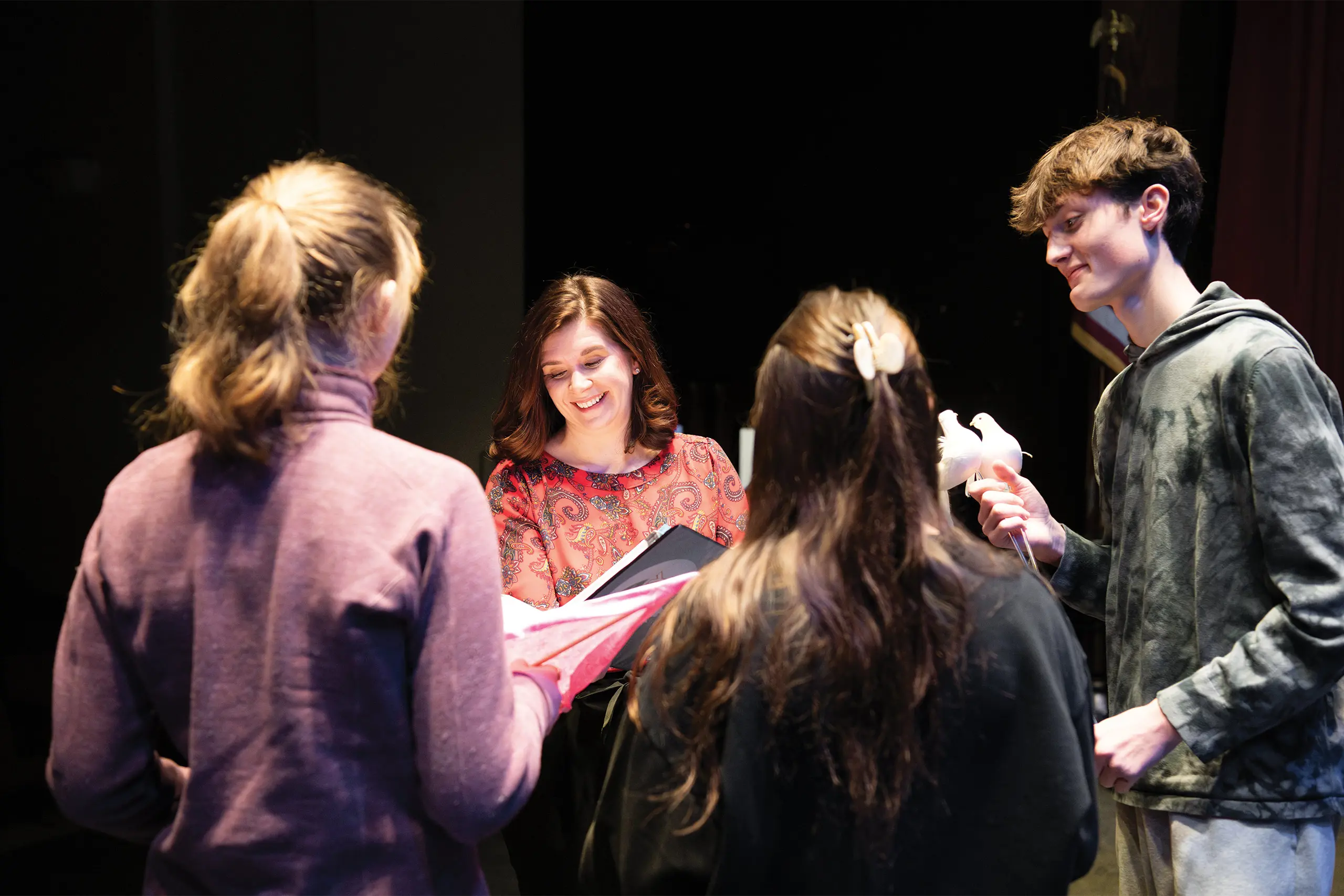
Opportunities for student leadership form another cornerstone of the program. Upper School students serve as stage managers, directors, playwrights, choreographers, and mentors, creating what Clark calls a pipeline of connection across divisions. This connection is especially visible during the Lower School musical, where a team of Upper School students serve as rehearsal assistants, helping to stage scenes and dance numbers, run backstage, and support the cast of young performers throughout the process.
“The skills gained through theater extend well beyond the stage: teamwork, grace under pressure, adaptability. Theater teaches more good skill sets than people often realize,” Clark explains. “How do you stay calm, patient, and keep moving forward when you run into unexpected hurdles?”
Clark often returns to a quote from Thornton Wilder, whose play Our Town was once performed at Shipley: “I regard the theater as the greatest of all art forms, the most immediate way in which a human being can share with another the sense of what it is to be a human being.” For Clark, this captures the essence of theater. “That’s what it is,” she says simply.
In an age of increasing digital isolation, she sees theater as essential. “The thing that makes theater unique from other art forms is that the human body is the medium. You only need people on stage and an audience to witness for it to be theater. If you strip all the spectacle away, the story being told is what matters most.”
“The skills gained through theater extend well beyond the stage: teamwork, grace under pressure, adaptability. Theater teaches more good skill sets than people often realize.” |
| — Chelsea Clark |
Clark’s own journey to Shipley wound through Temple University, professional work in Philadelphia and New York, and a master’s degree at Villanova focused on directing and dramaturgy. But she traces her love of theater back to seventh grade, when she performed in Annie. “It changed my life,” she recalls. “I found friends, I found a community, I found a place where I was able to do it all. I’ll never be able to give back enough to that gift. Watching other students have that lightbulb moment—whether they pursue theater forever or simply take a child of their own to the theater someday—that’s worth it.